



AN EXCLUSIVE
MILLENNIUM DINNER
June 24, 2026 | The Ivy Soho Brasserie | London
In partnership with

Overview
The shape of software delivery is changing faster than most operating models can absorb. The pattern is consistent across the companies announcing it: flatter orgs, smaller teams, end-to-end ownership, agents wired into the reviews and approvals and handoffs that management used to broker. The thesis underneath all of it is the same, software increasingly gets built by machines and directed by people, and the people who direct it have to be experts in the work itself.
That shift sounds like an org chart problem. It is actually an engineering substrate problem. An organization with seven management layers and quarterly release cycles cannot absorb agent-rate work by reorganizing. It needs a harness, a scoped, governed, evaluated system that lets single-task agents operate across the SDLC with observability and guardrails as first-class citizens.
Greenfield AI-native companies get to design that substrate from day one. Brownfield enterprises have to retrofit it onto fifteen-year-old codebases, audit committees, and customers who notice when things break. That retrofit is the work of this decade. It is also where most of the value is.
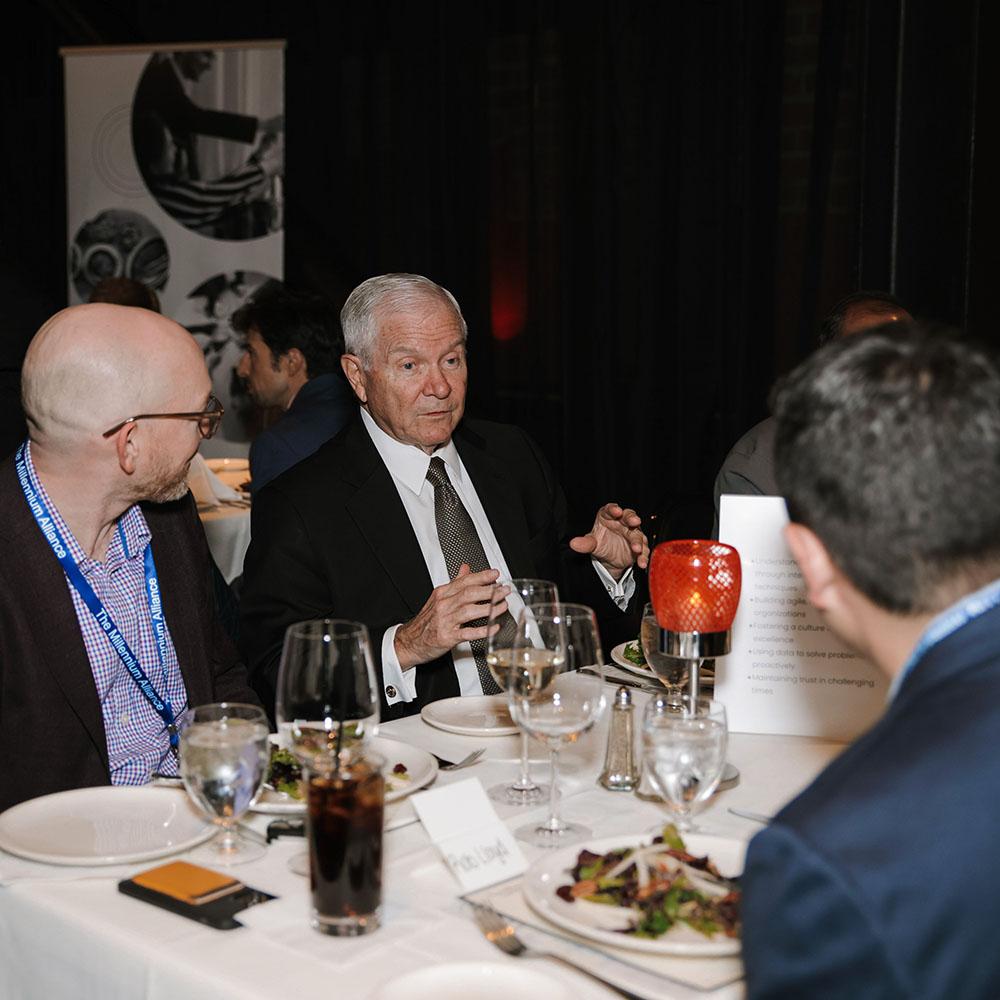

like-minded leaders in a relaxed but focused manner

conducive for you to establish powerful connections

to ensure your brand sustains its competitive advantage

Roundtable Discussions
During the Dinner you will participate in an interactive roundtable discussion of your choosing. Below are the topics:
- The substrate question - build, buy, or assemble. Every platform vendor is selling a harness; every foundation model lab is shipping its own. For a brownfield enterprise with real audit and compliance constraints, where is the line between adopting a vendor harness, building your own, and assembling pieces of both? And after three years of that work, what is the durable asset you own?
- The merge threshold. Agent-only merges are no longer hypothetical. Where is that acceptable in your SDLC, where is human-on-the-loop non-negotiable, and what audit evidence makes the line defensible?
- The Monday-morning question. Pure-play AI-native companies get to redesign in public. The rest of us have fifteen-year-old codebases, an audit committee, and a CFO asking why the AI bill tripled. What does the first thirty days of an AI-native transition look like that does not burn customer trust, and what evidence do you commit to producing inside that window to prove it is working?
Dinner Format
- Cocktail Hour
- Sahaj Welcome Address
- Roundtables & Dinner
- Dessert & Round-robin
