One Claim, Two P&Ls: What Healthcare CFOs Said in Austin
Fix the process before you buy the AI
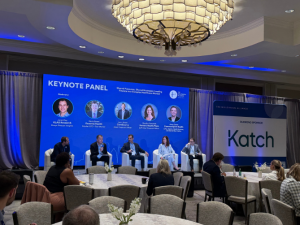
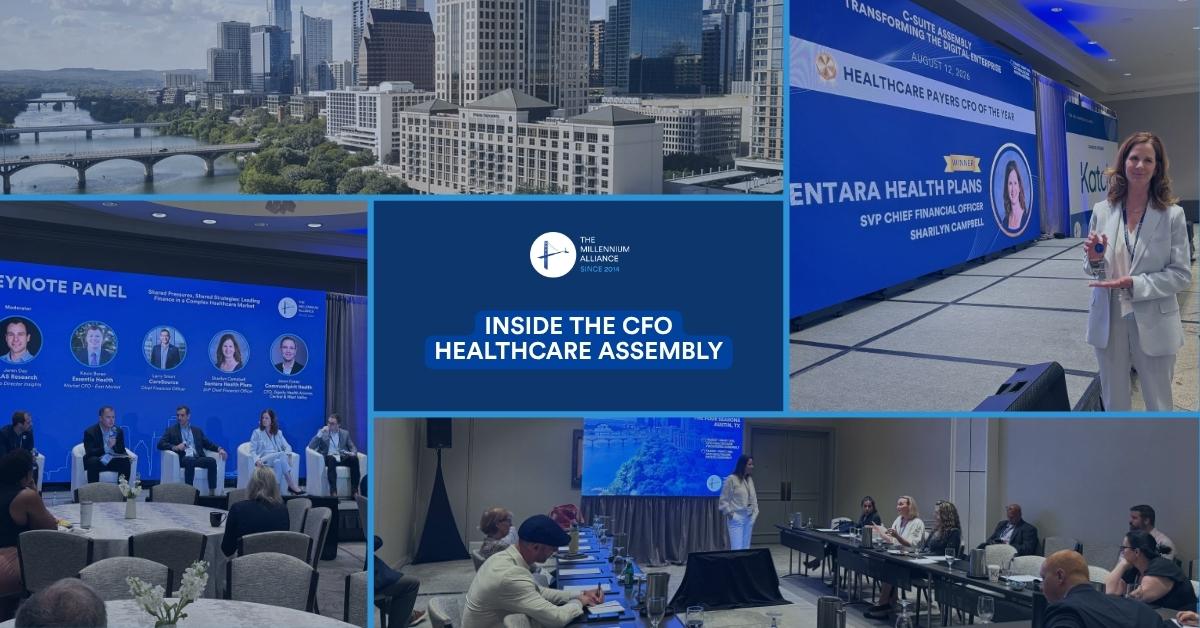
Provider CFOs and payer CFOs shared two days at our Millennium Alliance Enterprise CFO Healthcare Assembly in Austin this August, and they kept describing the same fight from opposite ends. Providers talked about claims that get denied or underpaid, then appealed late. Payers talked about claims that get overpaid, then chased late.
AI came up in every keynote, but nobody treated it as the plan. It’s what makes a better process possible, once the process is worth speeding up. (The keynotes came from Millennium partners, and the views below are the speakers’ own.)
What delegates told us before they arrived
Ahead of every Assembly, we ask registered delegates to describe their department’s objectives. For Austin, those answers came from about 90 decision makers across the provider and payer tracks. About seven in ten held finance titles, and most of the rest held operations, revenue or payment integrity roles.
Cost reduction and margin came up most, named by about four in ten. Efficiency and automation, growth, and revenue cycle performance each came in around three in ten. AI by name came up for about one in four, close to how often automation did.
The tracks differed. Provider delegates leaned toward revenue cycle and automation, each named by about four in ten. Payer delegates leaned toward cost and margin, named by about half, and about three in ten named payment integrity and medical cost. That’s what people said going in, not what was discussed in the room.
The margin is sitting in a department most CFOs rarely visit
Jeff Means, CEO of Long Tail Health Solutions, pointed to utilization management. “Utilization is ground zero for that friction,” he said. It decides whether a stay is paid as inpatient or as observation, “with an absolutely massive contractual adjustment, not a denial.” That’s easy to miss, because a contractual adjustment never shows up on a denial report.
He took on the belief that providers must use the criteria sets their payers use. “It is a requirement for them. It is not a requirement for you.” His scorecard advice runs against instinct too: “You should have initial denials. If you don’t, you’re not being aggressive enough on your inpatient status.” A low denial rate can mean the money was given away up front.
Think small about AI
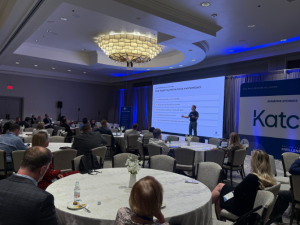
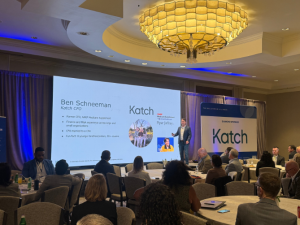
Ben Schneeman, Chief Financial Officer at Katch, is about two years into his company’s AI work. One of its best wins was “three days of work. Very minimal cost,” yet it “never would have showed up as a priority in our prioritization criteria.” He also warned about “AI value hitchhikers”: other changes made at the same time that get credited to the AI project.
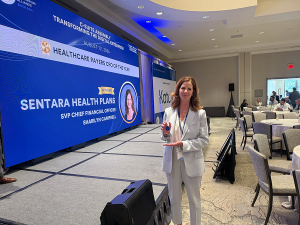
Means came at it from the other side, with a hockey story. “Just adding AI doesn’t give you the answer.” So where does AI earn its place? Sharilyn Campbell, SVP, CFO at Sentara Health Plans, kept it practical: “Taking mundane tasks out of the workflow and letting technology handle them allows you to focus your resources on the more critical work that needs to be done.”
Payers: the expensive way to find an overpayment is after you’ve paid it
David Jackson, VP Integrated Solutions and Partnerships at EXL Health, shared his company’s survey data. About 70 percent of payers believe they’re ahead of competitors on AI. Only 12 percent qualify as leaders by measurable business outcomes. “So there’s a gap between use and impact.”
Rodger Smith, VP, Strategic Accounts at EXL Health, said the fix is to move review earlier. “Stop leakage at the door. Let’s get it before the dollars go out.” The risk is accuracy. “If you’re only finding one out of every 20 claims, that’s a problem,” because providers want their cash flow and regulators can impose prompt pay fines.
Both sides want the fight to end
Means said payer-provider relationships are “harder than they’ve been in the 22 years I’ve been doing this.” So how do two sides that are measured against each other work together? Aron Weisskopf, SVP, Healthcare Economics & Value at UnitedHealthcare, offered a shared test: “Weigh every initiative on financial impact and access risk before it scales.” Either side can run it. Smith named the destination: “Some of these processes are still adversarial, but that’s not, as we heard this morning, probably the future of health care. It needs to get more collaborative.”
What to bring to December
Our Millennium Alliance Enterprise CFO Healthcare Assembly returns December 1-2 at the JW Marriott Arts District in Dallas. It opens with “The Modern Healthcare P&L: Bridging Provider Pressures and Payer Economics.” On Day 2, Tom Lindquist, Chief Growth & Strategy Officer at Medica; Kenneth Hogue, Chief Revenue Cycle Officer at UHS; and Jim Beiermann, CFO at CHRISTUS Health, will take on the question Smith left hanging: how do payers and providers stop fighting over the same claim? Their keynote panel, “Payer-Provider Alignment: Shared Data, Reduced Administrative Friction, and Joint Value,” will center on sharing data to cut prior authorization friction and denials, building risk contracts around total cost of care, and using joint analytics to manage medical loss ratio and capital allocation. Workshops pick up Austin’s threads, including “Show Me the ROI.”
Three questions to bring:
- Where does your loss actually show up? If it’s a contractual adjustment or a clawback, a denial dashboard won’t catch it.
- What’s your smallest AI win, and what was the baseline? Hitchhikers can’t hide in a number you measured first.
- Who on the other side of the claim could you share data with?
Details are at mill-all.com.